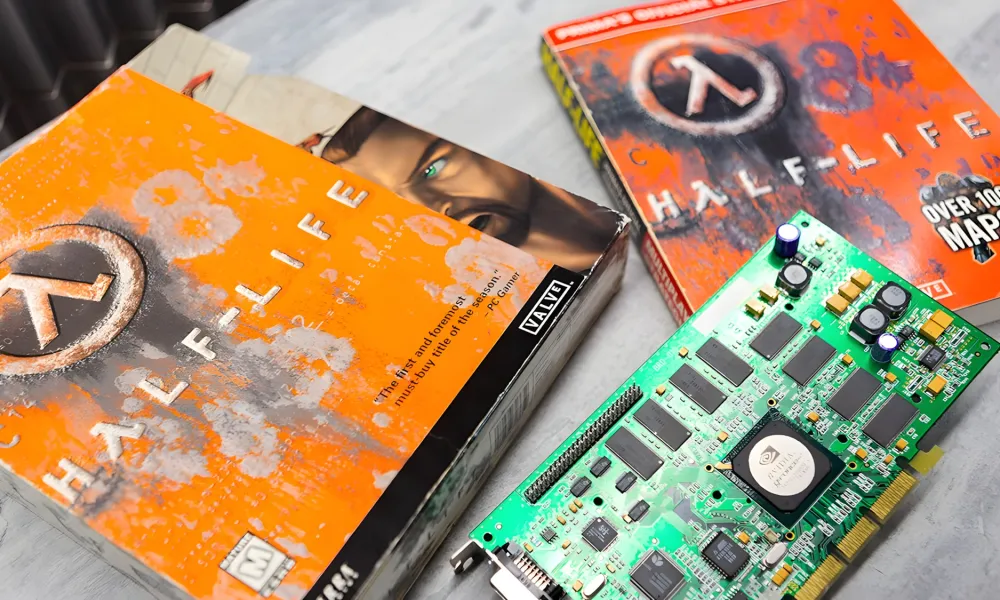

NVIDIA, a leader in graphics processing technology, recently celebrated the anniversary of its groundbreaking GeForce 256, a product that marked a significant milestone in the evolution of computer graphics. Released in 1999, the GeForce 256 was hailed as the world’s first GPU (Graphics Processing Unit), transforming the landscape of gaming and graphics rendering. As NVIDIA commemorates this pivotal moment, the company is also hinting at exciting advancements in artificial intelligence (AI) that could redefine the future of computing.
A Look Back at the GeForce 256
The GeForce 256 was revolutionary for several reasons. It was the first chip to introduce hardware transform and lighting (T&L), which allowed for more realistic rendering of 3D graphics. This innovation significantly improved the performance and quality of graphics in video games, setting a new standard in the industry. With 32 MB of video memory and support for Direct3D and OpenGL, the GeForce 256 enabled developers to create visually stunning environments and characters, ultimately leading to the immersive gaming experiences we see today.
The impact of the GeForce 256 extended beyond gaming; it also paved the way for advancements in professional graphics applications, such as CAD (Computer-Aided Design) and 3D modeling. NVIDIA’s commitment to pushing the boundaries of graphics technology has since been evident in its continuous development of GPUs, culminating in the powerful architectures we have today.
NVIDIA’s Evolution and AI Ambitions
As NVIDIA celebrates the success of the GeForce 256, it is also looking towards the future, particularly in the realm of artificial intelligence. The company has positioned itself at the forefront of AI innovation, leveraging its powerful GPUs to accelerate machine learning and deep learning processes.
NVIDIA’s AI initiatives have already made waves in various industries, from healthcare to autonomous vehicles. The company has been actively developing platforms like NVIDIA Deep Learning AI (DLA) and CUDA, which allow developers to harness the power of AI for diverse applications. During recent announcements, NVIDIA teased upcoming AI projects that promise to enhance existing technologies and introduce new possibilities across sectors.
The Future of AI at NVIDIA
- Generative AI: One of the most exciting areas NVIDIA is exploring is generative AI, which involves algorithms capable of creating new content, such as images, music, and even text. With their powerful GPUs, NVIDIA aims to make these technologies more accessible, allowing developers to incorporate generative capabilities into their applications.
- AI in Gaming: NVIDIA is also looking to integrate AI more deeply into gaming experiences. By utilizing AI algorithms, the company aims to enhance graphics rendering, optimize performance, and even create more responsive and intelligent non-player characters (NPCs). This could revolutionize the way players interact with games, making experiences more immersive and engaging.
- AI for Data Processing: Beyond gaming, NVIDIA is investing in AI solutions for data processing and analysis. By leveraging their GPUs, companies can accelerate data-intensive tasks, making it easier to gain insights from large datasets. This is particularly relevant in fields like finance, healthcare, and scientific research, where quick and accurate data analysis is crucial.
The Legacy of Innovation
The celebration of the GeForce 256 anniversary is not just a reflection of NVIDIA’s past but also a testament to its ongoing commitment to innovation. The company has consistently pushed the boundaries of what’s possible in graphics and computing, and its foray into AI demonstrates a desire to lead the industry in multiple domains.
As NVIDIA prepares to unveil its next steps in AI technology, enthusiasts and professionals alike are eager to see how these advancements will shape the future of computing. With a rich history and a bold vision, NVIDIA remains a key player in the tech landscape, driving change and inspiring the next generation of developers and creators.
Conclusion
NVIDIA’s celebration of the GeForce 256 anniversary serves as a reminder of the company’s transformative impact on the graphics industry. As it reflects on its past achievements, NVIDIA is also focused on the future, particularly in the realm of artificial intelligence. With ambitious plans to integrate AI into gaming, data processing, and various applications, NVIDIA is poised to continue its legacy of innovation. The journey from the GeForce 256 to the next generation of AI technologies marks an exciting chapter in NVIDIA’s history, and the tech world eagerly awaits what lies ahead.