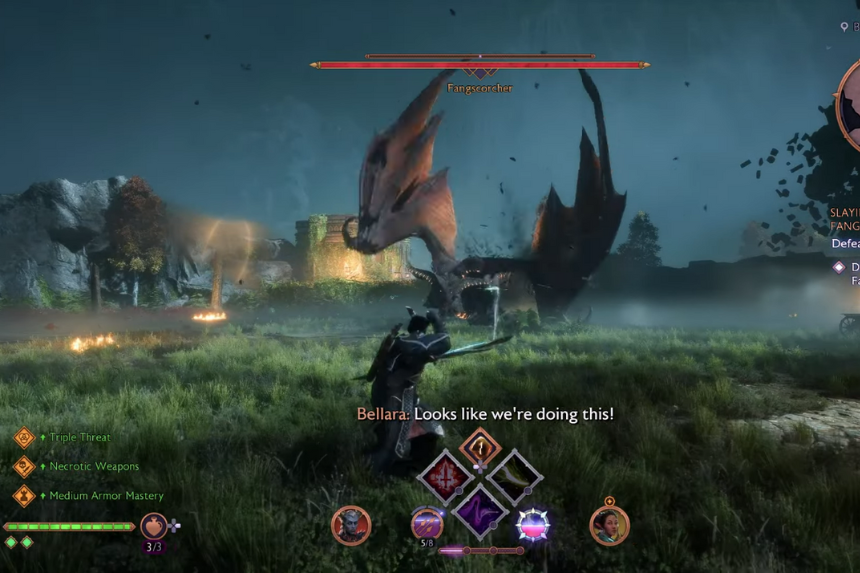

In Dragon Age: The Veilguard, high dragons are among the most formidable foes you’ll encounter, often requiring precise strategy, powerful gear, and well-coordinated team efforts to defeat. These massive, terrifying creatures present a significant challenge, but with the right preparation and tactics, they can be brought down. Whether you’re a seasoned adventurer or a newcomer to the Dragon Age franchise, these eight tips will give you the edge when hunting high dragons in The Veilguard.
1. Know Your Enemy: Study the Dragon’s Attack Patterns
Each high dragon in Dragon Age: The Veilguard has unique abilities and attack patterns, making it essential to observe their movements before launching an attack. These dragons can unleash devastating area-of-effect attacks, such as fire breath or magical blasts, and often take to the air, which can make them difficult to track.
- Airborne Attacks: High dragons often fly high above the battlefield, strafing with powerful breath attacks or diving for a crushing strike. Pay attention to when they take flight and be ready to dodge or interrupt their aerial onslaughts.
- Elemental Attacks: Many high dragons are attuned to specific elements like fire, ice, or lightning. Understanding the elemental properties of each dragon allows you to equip the right resistances to minimize the damage taken during the battle.
2. Bring the Right Team Composition
A well-balanced team is crucial to taking down a high dragon. You’ll need a combination of tank, damage dealers, and support characters to handle the fight’s many phases. Here’s a recommended party setup:
- Tank: A warrior or other tanky character should be at the forefront, drawing the dragon’s attention and absorbing damage. Make sure they’re equipped with high armor and resistance gear to survive the dragon’s physical and elemental attacks.
- Damage Dealers: Rogues and mages are excellent choices for dishing out consistent damage. Rogues can exploit the dragon’s weak spots, while mages can provide ranged elemental damage and control effects, especially with offensive spells like Fireball or Chain Lightning.
- Support: A healer or support character is indispensable to keep the party alive, particularly when the dragon uses area-of-effect attacks. A mage with healing spells or a support rogue that can apply buffs and debuffs will ensure your team stays in fighting shape.
3. Focus on the Dragon’s Weaknesses
Just like in previous Dragon Age titles, high dragons have certain weaknesses that can be exploited with the right tactics and abilities. These may include elemental vulnerabilities or weak points on their bodies that are exposed during specific phases of the fight.
- Elemental Vulnerabilities: Some high dragons are weak to specific elements. For example, a fire-breathing dragon may be vulnerable to cold or lightning attacks. Use your mage or archer to exploit these weaknesses to deal extra damage.
- Weak Points: The dragon’s wings, eyes, or tail are often vulnerable during certain attack phases. Keep an eye out for these opportunities to deliver heavy damage when the dragon is momentarily immobilized or stunned.
4. Control the Battlefield with Crowd Control
High dragons typically summon minions to fight alongside them, and these creatures can quickly overwhelm your party if left unchecked. To manage this threat, you should use crowd control tactics.
- Stun and Immobilize: Use abilities like Paralyze, Stunning Strike, or Frostbite to temporarily neutralize the dragon’s minions and limit their movement. This will give your team the breathing room needed to focus on the dragon itself.
- Area Denial: Spells like Cone of Cold or Earthquake can disrupt the dragon’s minions, keeping them away from your more vulnerable team members while also preventing the dragon from taking advantage of them.
5. Keep Your Distance and Watch for Tail Swipes
High dragons often have a deadly tail swipe attack that can deal massive damage to any character caught in its path. When the dragon is grounded, keep your distance to avoid being hit by its tail, which often sweeps behind it in a wide arc.
- Positioning: Position your damage dealers and healers at a safe distance, ensuring they can hit the dragon without risking being caught in its tail attack.
- Stay Behind the Dragon: If possible, position your tank and damage dealers behind the dragon to avoid its frontal attacks. This is also where you can take advantage of its weak spots for more efficient damage.
6. Use Terrain to Your Advantage
Some areas where high dragons are fought contain various terrain features, such as rocks, trees, or structures. These can be used strategically to avoid the dragon’s attacks or create chokepoints for its minions.
- Take Cover: Use large rocks or buildings to shield your party from the dragon’s breath attacks. This can give your team the necessary protection while they regroup or heal.
- Trap the Minions: High dragons often summon smaller creatures during the battle. Funnel these minions toward terrain features that can trap or slow them, reducing the number of enemies you need to deal with at once.
7. Keep an Eye on the Dragon’s Health and Stamina
While dragons are powerful, they also have a stamina mechanic that can be exploited. Once their stamina is depleted, high dragons become more vulnerable to attacks, especially those that focus on critical damage.
- Stamina Drain: Use abilities that focus on draining or reducing the dragon’s stamina. Certain spells or abilities can increase your damage output during this phase.
- Watch for Rage Phases: High dragons may enter a “rage” state when their health drops below a certain threshold. During these phases, their attacks become faster and more lethal, and they may gain new abilities. Be prepared to adjust your strategy to deal with these heightened attacks.
8. Prepare for the Final Blow
The last phase of a high dragon battle is often the most intense. When the dragon is on its last legs, it may enter a desperate, enraged state that makes it much more dangerous. At this point, you need to have your best abilities ready to deliver the final blow.
- Use Potions and Buffs: Ensure your characters are stocked with healing potions and damage buffs to increase your chances of surviving this final phase.
- Coordinate Your Attacks: Once the dragon’s health is low, coordinate your team’s abilities to unleash a powerful combination of attacks. Aim for the dragon’s weak points and use your most damaging abilities to quickly finish the fight.
Conclusion
Slaying high dragons in Dragon Age: The Veilguard is a thrilling and challenging experience that requires skill, patience, and tactical thinking. By understanding the dragon’s attack patterns, bringing the right team, exploiting weaknesses, and controlling the battlefield, you can increase your chances of success. With the right preparation, you’ll be able to emerge victorious, claiming the rare loot and the satisfaction of having conquered one of the most awe-inspiring creatures in the Dragon Age universe. Happy hunting!